The Most Overlooked Source of New Cosmetic Patients | Brilliant Brand Solutions
The average cosmetic dental practice is sitting on a patient acquisition channel that converts at 68% and costs a fraction of what Google Ads charges — and most practices are actively ignoring it.
Not because they do not know it exists. Because they have never built a system around it.
That channel is the patients already in your chairs.
Referrals from existing patients convert to active patients at 68%, compared to 24% for paid digital advertising, according to the American Dental Association's 2025 Patient Acquisition Survey. Referred patients stay 37% longer, accept 28% more treatment, and are 1.8 times more likely to refer others — meaning the channel compounds the longer you invest in it. And the cost to acquire a referred cosmetic patient averages $20 to $50, compared to $150 to $400 for a Google Ads-generated patient in a competitive market.
You already have this channel. Most practices are leaving a majority of it on the table.
The Referral Gap Is Not What You Think It Is
Here is the number that should stop every practice owner cold: the average dental practice generates only 4.2 referrals per provider per month despite having a patient base capable of producing 11 to 14 referrals per month, according to Dental Economics' 2025 Practice Growth Report. That is a 62% gap between referral potential and referral reality.
The common assumption is that patients who do not refer are either not satisfied enough or not inclined to recommend. The data says something different. According to the ADA, the single largest barrier to referrals — accounting for 38% of all missed referrals — is simply this: the patient was never asked.
Your front desk staff asks for referrals during only 22% of checkout interactions, despite 78% of staff reporting that they "usually" ask. The gap between what people think they are doing and what is actually happening is one of the most expensive disconnects in dental practice management.
Patients who love your practice, who leave your chair feeling proud of their smile, who would genuinely recommend you to anyone in their network — those patients are walking out the door every day without having been asked. That is not a patient problem. That is a system problem. And system problems are fixable.
Why Referred Cosmetic Patients Are Structurally Different
In a general dental practice, a referral is valuable. In a high-dollar cosmetic practice, a referral is transformational.
The math changes when your average case value is in the thousands. A referred patient who arrives already trusting you, who came on the recommendation of someone they trust, who has had the practice pre-sold to them through a personal conversation — that patient accepts comprehensive cosmetic treatment at 45 to 55%, compared to 30 to 35% for a cold-channel patient who found you through an ad. They ask fewer price-comparison questions. They require less persuasion. They are more likely to refer themselves.
According to Wharton School of Business customer referral research, referred patients have a 37% higher retention rate and 25% higher lifetime value than patients acquired through advertising. For a cosmetic practice where a full-arch case might carry a $15,000 to $25,000 price tag, that lifetime value premium is not a small number.
The referral multiplier in cosmetic dentistry is particularly powerful because of the nature of the result. Smile transformations are visible. They generate compliments and questions. Your patient becomes a walking before-and-after. Every conversation about their smile is an organic referral opportunity — but only if your practice has given them the right language and the right opening to make the introduction.
The Two Internal Marketing Moves Most Practices Skip
When we talk about internal marketing in a cosmetic practice, we mean systematic strategies that grow the practice through the existing patient base — not through external advertising. There are two moves that most practices skip entirely, and both are leaving significant revenue on the floor.
The Referral Ask
This is the most straightforward internal marketing strategy and the most consistently underexecuted. The mechanics are simple: identify the right moment, give team members the right language, and ask every appropriate patient.
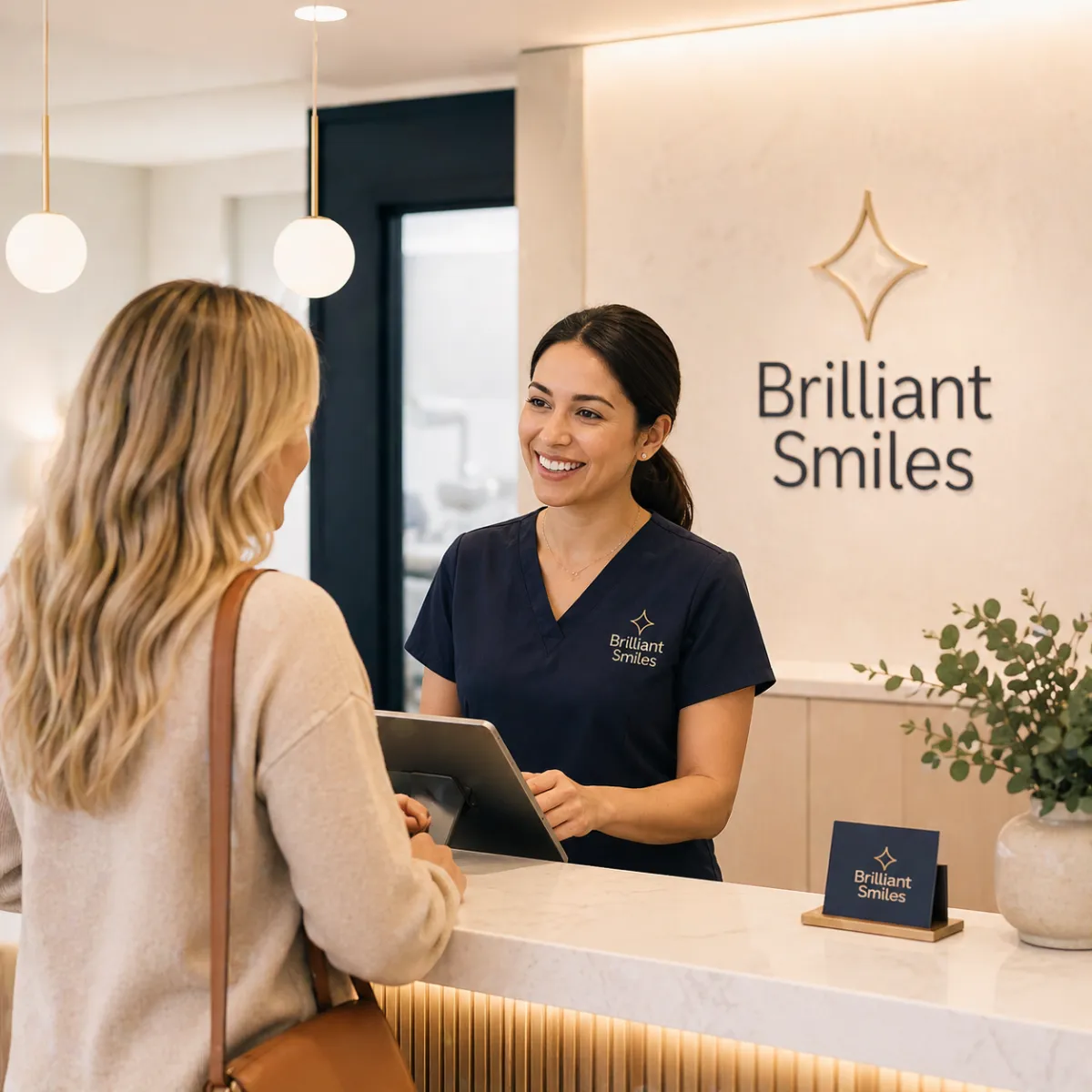
The right moment is specific. Research from PatientPop's 2025 referral benchmark confirms what any experienced dental team already knows intuitively: the best time to ask for a referral is immediately after a positive experience — at the end of a consultation that went well, at the reveal appointment when a patient sees their new smile for the first time, or at the follow-up visit when a patient is still in the glow of their result.
These are high-emotion moments. Patients are happy, proud, and connected to your team. They are primed to share. A simple, genuine statement from a team member — "We would love to help more people feel the way you feel right now. If you know anyone who has been thinking about their smile, we would take amazing care of them" — is enough. It does not require a script that sounds like a script. It requires a real moment and a genuine ask.
Practices that implement even a basic referral ask system at these moments see 30 to 50% increases in referral volume, according to 2025 dental marketing trend data. Not from a new campaign. Not from a new platform. From a conversation that was already happening — just without the ask at the end.
Just a conversation that is natural, in-the-moment. What would a 30-50% increase in referral volume mean for your practice?
The Reactivation Campaign
Every cosmetic practice has a dormant patient base. These are patients who completed a treatment cycle, had a good experience, and then quietly fell off the schedule. They have not left — they have just not been given a reason to come back.
According to DataFlux research on premium dental clinic reactivation, patients who complete a major cosmetic treatment are 3.2 times more likely to start a new treatment within two years — but only if the practice reaches out at the right time with the right message. The optimal recall window varies by treatment type: cosmetic patients respond best to re-engagement messaging at eight to ten months post-procedure, when the newness of their initial result has worn enough that they are open to enhancement opportunities.
The 20% of a practice's patient base that is inactive at any given time represents a significant revenue floor. These patients already trust you, already know your team, and already have a relationship with your brand. The cost to reactivate them is a fraction of the cost to acquire someone new — and their conversion rate is substantially higher. Compare the cost of sending a few emails or text messages (that can be mostly copy/paste) and/or a phone call or 2 with the cost of Google or social media ads.
Do I have your attention?
A systematic reactivation campaign does not require elaborate technology. It requires a clear definition of "inactive" for your practice, a segmented list, and outreach that is personal and specific rather than generic. "We have not seen you since your veneer completion — we wanted to check in and see how you are loving your smile" is a different message than a generic recall reminder, and it lands very differently.
The Hidden Cost of a Passive Referral Strategy
Most cosmetic practices do not have a referral strategy. They have a referral hope — a general expectation that satisfied patients will refer naturally, without prompting, without systems, and without tracking.
Some do. But 62% of them do not, and for the reasons we have covered: they were never asked, the moment passed, the connection was never made explicit.
The passive approach is not neutral. The average patient acquisition cost through paid digital advertising has risen 18% annually over the past three years, according to Dental Economics. Practices without referral systems become increasingly dependent on paid channels as those costs rise, compressing margins and reducing profitability. The referral-dependent practice spends 62% less on marketing than the advertising-dependent practice while growing at the same rate.
Put differently: your existing patients are the lowest-cost, highest-converting, most treatment-accepting acquisition channel available to you. The practice that builds systems around that channel grows more efficiently, more sustainably, and with better patients than the one running ads.
Where to Start
You do not need to overhaul your entire practice to activate this. The starting point is simple: map the moments where a referral ask makes sense, give your team the language, and track what happens.
Then look at your inactive patient list. Identify the patients who completed cosmetic work in the last one to two years and have not been back. Build a personal outreach sequence and start the conversation.
These are not complicated moves. They are consistent ones. And consistency is what most cosmetic practices' internal marketing strategies are missing.
ThePatient Experience Playbook →walks through the specific systems — including referral ask frameworks and reactivation sequencing — that high-performing cosmetic practices have built into their patient experience. At $7, it is the most practical return on investment in your marketing stack.
Download the Patient Experience Playbook →
Sources & Further Reading
CLICKVISION Digital — Dental Marketing Statistics: 80+ Data Points (2026)— Referral conversion rates, channel comparison, and practice marketing benchmarks.click-vision.com/dental-marketing-statistics
US Tech Automations — Dental Referral Program Automation ROI Analysis 2026— ADA, PatientPop, and Dental Economics referral data including conversion rates, cost-per-patient benchmarks, and referral gap analysis.ustechautomations.com
Rework — Patient Referral Programs for Dental Practices— Wharton Business School referral lifetime value research and referral program implementation frameworks.resources.rework.com
DataFlux — AI-Powered Patient Reactivation for Premium Dental Clinics— Treatment lifecycle analysis, optimal reactivation windows by procedure type, and reactivation ROI data for premium cosmetic practices.datafluxsoft.com
