What Affluent Cosmetic Patients Search Before They Call (And How To Show Up As The Answer)
Affluent cosmetic patients don’t start with, “Let me call the office.”
They start by quietly interrogating Google, AI tools, and voice assistants to see who actually understands what they want—and who just does “teeth stuff.”
This breakdown is pulled from current research on dental patient behavior, AI search, and voice search trends—and from what I see working for cosmetic practices in real life.
This post is about what they search before they ever call you… and how to use that to polish your FAQs, treatment pages, and visibility in AI and voice search.
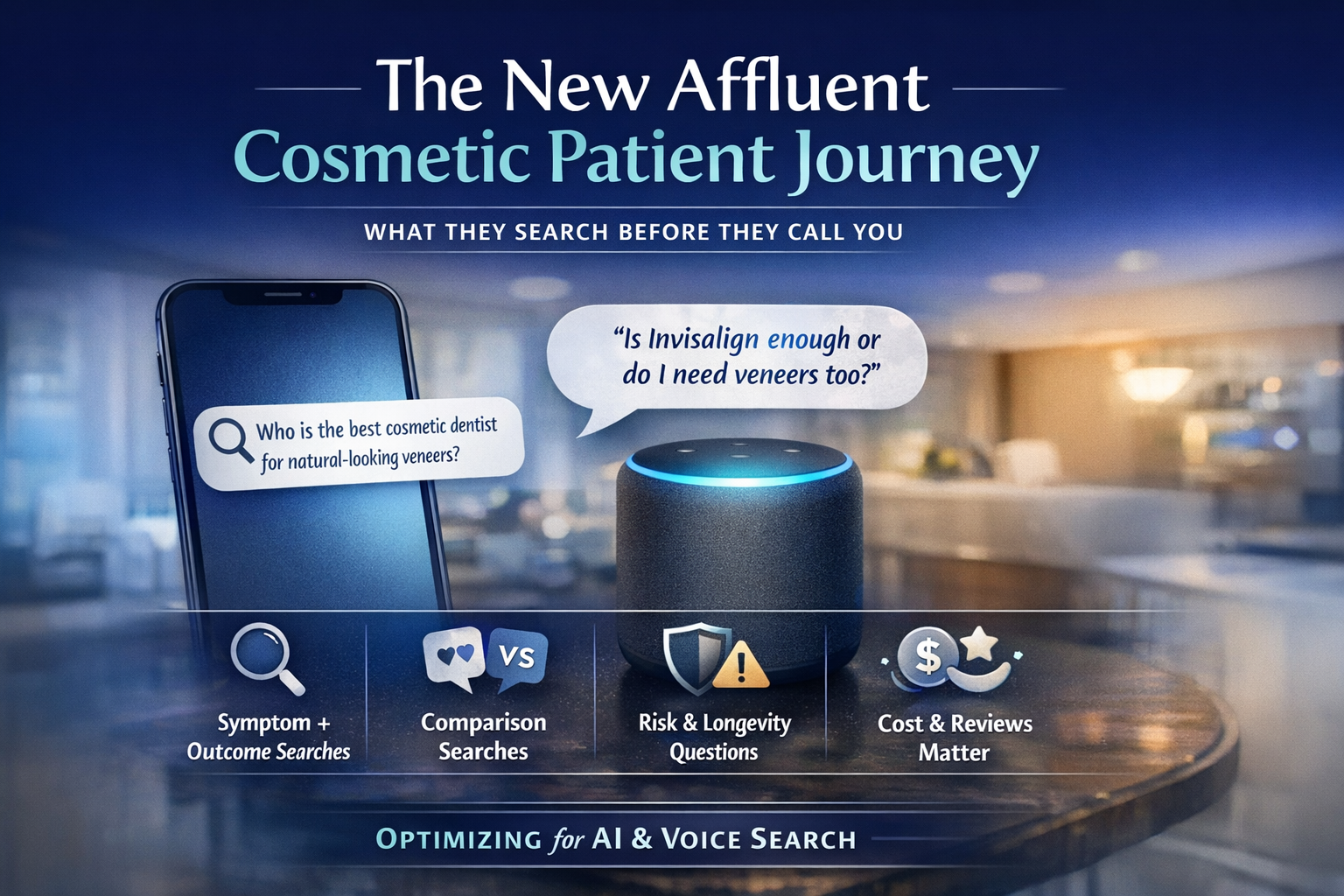
The New Affluent Cosmetic Patient Journey
Your next veneer or implant case is not typing “cosmetic dentist [city]” and calling the first result.
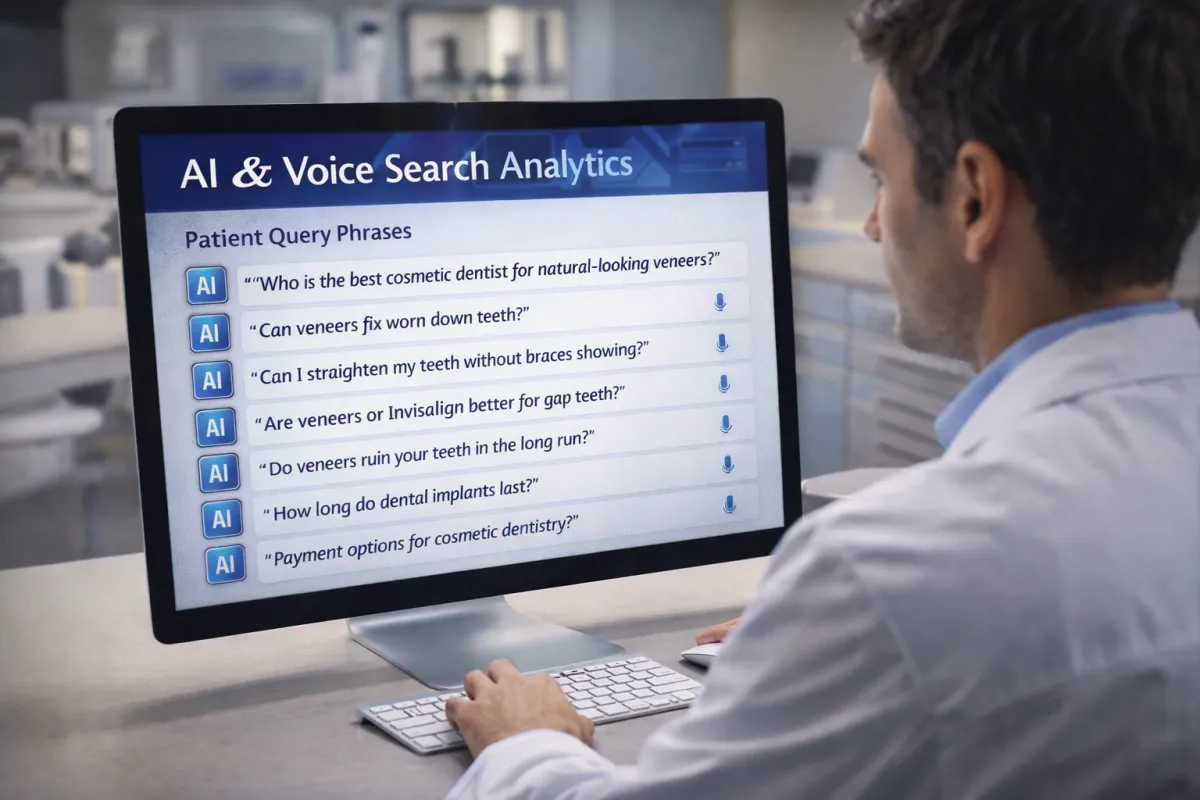
They’re asking full, conversational questions like:
“Who is the best cosmetic dentist near me for veneers that don’t look fake?”
“How do I fix short, worn teeth without braces?”
“Is Invisalign enough to fix my smile or do I need veneers too?”
In other words: they’re not looking for “procedures.” They’re looking for outcomes, reassurance, and a practice that feels like a safe bet for a high-ticket decision. And they are most certainly not searching “cheap dentists near me.”
AI-driven search, Google’s “People Also Ask,” and voice assistants have quietly become their first consult. If your content doesn’t sound like the way they think and speak, you’re not just missing clicks—you’re never even in the consideration set.
What Affluent Cosmetic Patients Actually Search Before They Call
Let’s pull back the curtain on the kinds of searches your best patients are making weeks or months before they ever hit “submit” on your contact form.
Symptom + Outcome Searches
Most high-value searches start with a personal annoyance or insecurity, not a procedure name:
“My veneers look bulky. What can fix it?"
“How to fix small teeth without braces”
“Teeth worn down from grinding fix options”
“Smile makeover to widen narrow smile”
What they’re really asking is:
“Can someone fix this exact thing without making me look overdone?”
If your veneer or smile-makeover page only says “We offer porcelain veneers to improve the appearance of your smile,” you’re speaking doctor.
Their search is in patient. You can offer those veneers all you want, but they want to know “transformation.” Answer their questions. Then answer your phone...because they will be calling.
“Which Is Better?” Comparison Searches
Affluent patients love to compare—and they use search to do it:
“Dental bonding vs veneers for small gaps”
“Veneers vs Invisalign for crooked front teeth”
“Implants vs bridge which lasts longer”
“All-on-4 vs individual implants pros and cons”
These searches are gold because they’re high intent.
By the time someone is Googling “Veneers vs bonding cost vs longevity,” they’re not just curious—they’re pre-shopping. The only question is if YOU make the short list the voice or AI search provides.
If your content doesn’t clearly answer who each option is best for, patients will keep searching until they find a practice that does. Today’s cosmetic dental patients are research savvy. They want all the answers before they ever call you. Because if you don’t have the relevant information they want, you are certainly not the cosmetic practice they need. They've got questions. Give them the answers.
Risk, Regret, and Longevity Searches
Before a four- or five-figure treatment, high-end patients want to know what could go wrong:
“Do veneers ruin your teeth”
“Can veneers be reversed”
“How long do dental implants really last”
“What happens if Invisalign doesn’t work”
They’re screening for honesty and maturity.
If all they see on your site is “Veneers are a quick, easy way to get a perfect smile!” they’ll keep scrolling for a doctor willing to talk about downsides, limitations, and maintenance. Be transparent.
Money and Time (Without Saying “Cheap”)
Affluent doesn’t mean “doesn’t care about cost.”
It means they care about value and tradeoffs:
“Cost of porcelain veneers in [city] for 8 teeth”
“Are veneers worth it long term”
“Payment plans for dental implants near me”
“How long does Invisalign take for mild crowding”
They’re trying to answer:
“How big of a commitment is this, really—and is it worth it for the result I want?”
When your website dodges cost entirely or hides it behind a generic “every smile is different” line, you look more opaque than premium. Even, “Porcelain veneers for 8 teeth start at $$$” gives prospective patients a starting point. At least give them an idea.
Social Proof and “Vibe Check” Searches
Once they’ve narrowed the field, the final searches are often about safety, aesthetics, and experience:
“Best cosmetic dentist near me reviews”
“[city] cosmetic dentist before and after veneers”
“Sedation cosmetic dentist near me for implants”
“Spa-like dental office [city]”
They’re not just choosing a provider; they’re choosing a brand, a space, and an experience to match the dollars they’re about to spend.
If your brand, photos, and language don’t line up with the level of client you say you want, the search ends with someone else. And think again if you don’t think patients aren’t scouring your Instagram feed searching for before and after photos, across all your services. They want to know there is quality behind every treatment you provide.
How AI and Voice Assistants “Read” These Searches
Here’s the part most practices miss:
The way patients say these questions is exactly how AI and voice tools like to answer them.
Voice and AI tools tend to prioritize:
Natural, conversational questions and answers (“What’s the difference between bonding and veneers?”).
Clear, tight 1–2 sentence responses that sound like something you could read aloud.
Content that directly matches search intent (comparison, cost, risk, downtime, etc.), not just a keyword stuffed in a paragraph.
That means the more your site sounds like real questions and real answers, the more likely it is to be:
Featured in “People Also Ask”
Pulled into AI answer boxes
Read aloud by Siri, Google Assistant, or Alexa
This is what I call “answer engine optimization.”
--> Instead of just optimizing to show up, you’re optimizing to be the answer. Remember, we aren't optimizing anymore for Google search circa 2015. You're optimizing for the searches of today.
Turn Pre‑Call Searches Into a Powerful FAQ Hub
You do not need a 50-page SEO plan to start winning here.
You can get a lot of leverage by building a smart FAQ system around what patients already ask.
Step 1: Group FAQs by Intent, Not by Procedure
Create FAQ sections like:
“Choosing the right cosmetic treatment”
“What to expect before, during, and after”
“Comfort, sedation, and recovery”
“Cost, financing, and long-term value”
“Fixing old dentistry and regret cases”
Under each group, add questions in actual patient language, for example:
“What’s the difference between bonding and veneers?”
“Can I fix just my front teeth or do I need a full smile makeover?”
“How painful are dental implants really?”
“Are veneers permanent? Can they be removed?”
“Do you offer payment plans for larger cosmetic cases?”
Step 2: Answer Like a Human (and a Voice Assistant)
Use this structure:
One clear question written exactly how a patient would ask it.
A concise 1–2 sentence answer that could be read aloud and still make sense.
Optional detail or nuance in a short paragraph or bullet list below.
Example:
Q: What’s the difference between bonding and veneers?
A: Both bonding and veneers can close gaps and reshape teeth, but bonding is a quick, lower-cost option and veneers are a more durable, custom-crafted solution designed to last longer and resist staining.
Voice assistants can read that first line.
Humans who want more detail can keep scrolling.
Spruce Up Treatment Pages to Match How They Decide
Now let’s apply all of this to the pages that sell your highest-value treatments.
Veneers Page
Shift from:
“We offer porcelain veneers to improve the appearance of your smile.”
To something like:
Open with an outcome-driven question:
“Want a brighter, more balanced smile without looking ‘done’ or fake?”Briefly define veneers in plain language.
Add a mini “Veneers vs Bonding vs Invisalign” comparison section with bullets for:
Best for
Longevity
Ideal patient
Add 4–6 FAQs at the bottom, such as:
“Do veneers ruin your teeth?”
“How many veneers do I need—8 or 10?”
“Can I get veneers on just one or two teeth?”
"What if I don't like how my veneers look?"
Implants Page
Move beyond “implants replace missing teeth” and address what they really care about:
Longevity and maintenance: “How long do dental implants last?”
Comfort and recovery: “How painful is the implant process?”
Aesthetics: “Will my implant tooth look like my other teeth?”
Financing: “Do you offer payment plans for implants?”
Include a short “Implants vs Bridge vs Partial” section that spells out:
Which option is most stable.
Which preserves bone and facial structure.
Which is best for someone thinking long-term.
Invisalign (or Clear Aligner) Page
Speak to the image-conscious adult who is Googling on their lunch break:
Open with something like: “Want straighter teeth without braces showing up in every selfie and Zoom call?”
Add comparison points:
Invisalign vs Braces for visibility and lifestyle
Invisalign vs Veneers for mild cosmetic concerns
FAQs might include:
“How long does Invisalign take for mild crowding?”
“Can Invisalign widen my smile?”
“Will I need bonded retainers afterward?”
When each treatment page answers the exact questions patients are already typing into search and AI tools, the page suddenly becomes much more “pickable” for both algorithms and humans. But you're also answering the exact questions they have. Like, you're reading their minds. You're anticipating needs already.
Quick‑Start AI + Voice Search Optimization Checklist
If you want a simple action list instead of a big tech project, here’s where to start:
Rewrite the first paragraph on your top 3 treatment pages (veneers, implants, Invisalign) so it clearly answers the most common “before they call” question for that treatment.
Add 4–6 FAQs to each treatment page, using real patient phrasing pulled from consults, emails, and DMs.
Create one global Cosmetic FAQs page that covers risk, comfort, cost, and timelines using natural, conversational language.
Tidy up your local details (name, address, phone, hours, services) everywhere you appear online so voice assistants get consistent information when they recommend you.
Make sure your site loads quickly and is mobile-friendly, because voice-search users are often on the go and won’t wait.
None of this requires you to “be good with tech.”
It requires you to take what you already say in consults and put it where AI and voice search can actually find—and repeat—it.
Want Help Turning This Into a Done‑For‑You Plan?
Most cosmetic practices are still writing for 2015 Google, not 2026 AI and voice.
I built The Practice Playbook: The Local AI Ranking Book for Cosmetic Dentists, specifically for cosmetic dental practices that want:
• Clear, patient-friendly language that works with how people actually search today — Google, AI tools, and voice assistants.
• Real examples of the questions affluent cosmetic patients are asking before they ever contact a practice.
• Simple weekly actions your team can implement to improve visibility in AI search, voice search, and modern Google results.
If you want your practice showing up when high-value cosmetic patients ask AI tools and voice assistants who they should trust with their smile, The Practice Playbook will show you how.
Early buyers will also receive access to a live implementation work session, where we’ll walk through how to start applying the playbook to your practice.
To be eligible for the live session, your purchase must be completed by March 13, 2026. Space is limited, so once the session reaches capacity, registration will close.
Sources & Further Reading
Here are a few of the resources and trends informing how I think about AI, voice search, and cosmetic patient behavior:
Recent research on dental patient preferences and decision-making.
2026 updates on voice search optimization for dental practices.
Guides on AI search and “answer engine” optimization for dentists.
Current articles on how AI is changing how patients find dental practices.
