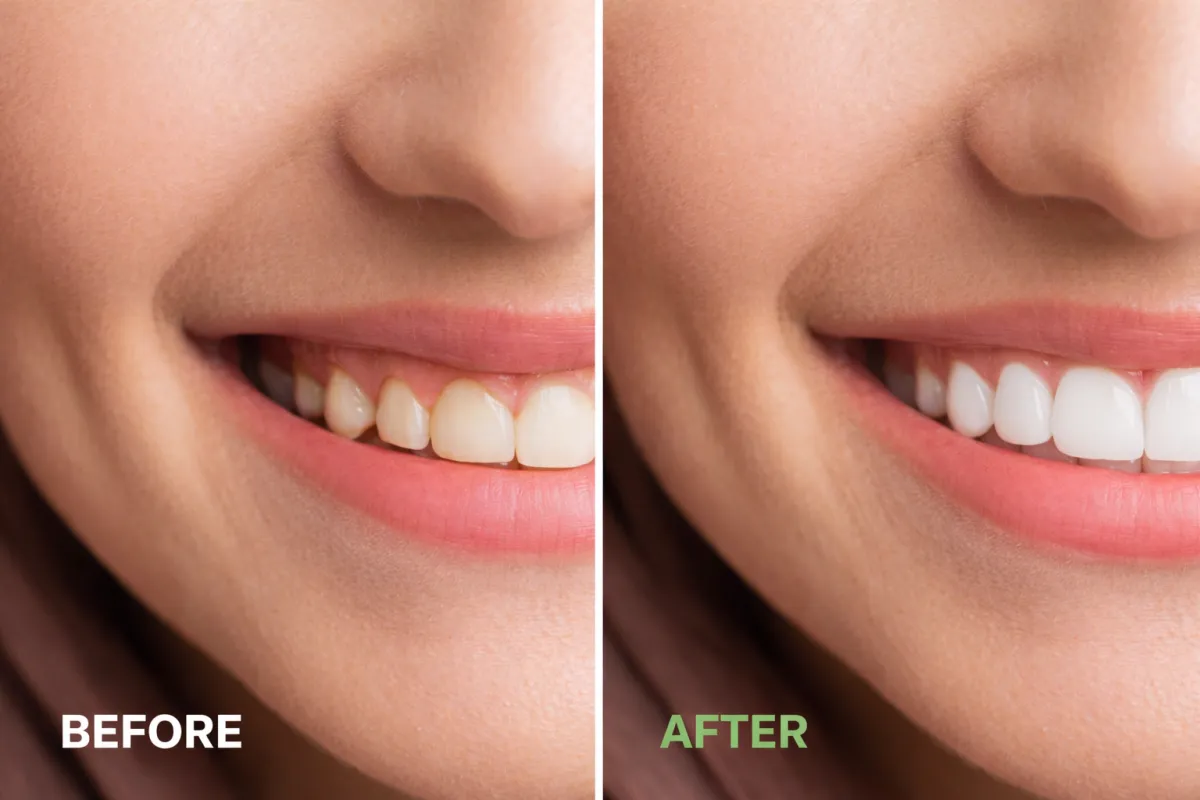
Digital Smile Design & the AI Consult That Closes Cases
I've been a patient at the same dental office for years. Good hygienists, on-time appointments, the works. And in all that time, I have never once been shown what my smile could look like. No mention of whitening, no veneers conversation, nothing about what's possible beyond "your teeth look fine."
That's not a complaint about my dentist. It's a data point about the industry. If a practice never shows me the outcome, I never know there's a decision to make. I just assume I'm not a candidate for anything — or that it's not worth asking about.
That's exactly what Digital Smile Design (DSD) was built to solve on the clinical side. DSD is a digital smile-preview technique — there are several software platforms that do this, and which one a practice uses matters less than whether it's used at all. Research on the approach consistently finds the same thing: when patients are shown a digital mock-up of their proposed new smile before treatment begins, it improves communication and increases the likelihood they'll accept the treatment plan. And right now, the same problem DSD solves in the chair is showing up earlier, on the visibility side, before a patient ever books an appointment — driven by AI. PubMed Central
Position First, Price Second — Then Let Them See It
Here's where most practices get the order backwards. They lead with price ("veneers start at $X") or with reassurance ("we're gentle and affordable") before they've established why this practice, specifically, is the one to trust with a cosmetic case.
Position has to come first. Before a patient evaluates your price, they need a clear answer to "what is this practice known for, and is that what I want?" A general practice that "also does cosmetic" and a practice that has built its identity around smile transformation are not competing for the same patient — even if they're quoting the same procedure. Get the position right, and price stops being the first objection. It becomes a confirmation of value the patient has already decided they want.
A digital smile preview is one of the clearest tools available for establishing that position, because it does something a price list can't: it makes the outcome visible before the patient has committed to anything. The patient isn't buying a procedure. They're saying yes to a result they've already seen reflected back at them, in their own face.
Trust Before the Consult, Not During It
The instinct in most consult rooms is to build trust in the room — through credentials on the wall, a friendly chairside manner, maybe a testimonial binder. All useful. All happening too late.
Trust has to be established before the patient ever sits down. That's the role AI visibility plays now, and it's no longer a fringe behavior. By the end of 2025, roughly a third of U.S. adults reported using AI chatbots to find health information, double the rate from just the year before, and people using these tools weekly is now the norm rather than the exception among that group. That same research found AI is increasingly becoming a single starting point for the whole healthcare journey — including searching for specific providers and clinics, not just symptoms. Fierce Healthcare + 2
When a patient asks an AI assistant which cosmetic dentist to see for veneers or a smile makeover, and your practice comes back as the clear, specific answer — not "a dentist," but the dentist known for this — that patient walks into the consult already trusting your judgment. The smile preview you show them isn't introducing trust. It's confirming trust they already extended.
Compare that to a patient who found you through a generic listing and has no prior impression of your expertise. You're now using the consult to do two jobs at once: build trust and sell an outcome. That's a harder room, even with the exact same technology in your hands.
This is why category ownership matters more than general visibility. You don't want to be findable as "a cosmetic dentist near me." You want to be the answer when AI or a patient asks who owns minimal-prep veneers, or smile makeovers, or digital smile design, in your market. Own the category, and the consult becomes the formality — not the persuasion.
What This Looks Like in the Room
A consult built on position-then-price, trust-before-the-room looks like this:
The patient arrives already positioned. Your AI visibility and digital footprint have already told them what you're known for, before they say a word.
The preview confirms, it doesn't convince. It isn't pulled out to overcome hesitation — it's the centerpiece, introduced early, because the patient is already inclined to trust what they're about to see.
Price lands last, and lands easy. Once a patient has seen their own outcome and already trusts your authority, the investment conversation is a logistics conversation, not a persuasion one.
The Quiet Shift Worth Making This Week
If you take nothing else from this: ask whether your own patients are even being shown what's possible. My experience isn't unusual — a lot of patients never get a glimpse of their own potential outcome, simply because no one walked them through it. Practices that build the habit of visually showing patients their smile as a normal part of every consult — not just the cosmetic ones who already asked — consistently report it changes the conversation. Patients say yes to things they can see. They rarely say yes to things they were only told about.
Position. Trust. Then the visual. Then the price. In that order, the close takes care of itself.
Curious whether your practice is actually showing up — and showing up as the authority — when patients (or AI) are searching for cosmetic dentists in your market? Find out with the AI Visibility Audit ($247).
Not ready for a full audit yet? Start with The Practice Playbook for a look at how AI search is already shaping which practices get chosen.
Related Reading:
The New Patient Journey Has Changed — Here's What AI Search Did to It
Before-and-After Photos: The Trust Signal You're Probably Underusing
Sources:
Digital Smile Design — An Innovative Tool in Aesthetic Dentistry, PMC (National Library of Medicine) — https://pmc.ncbi.nlm.nih.gov/articles/PMC7193250/
AI Chatbot Use for Health Information Up 16% From 2024: Rock Health Survey, Fierce Healthcare (reporting on Rock Health's 2025 Consumer Adoption of Digital Health Survey) — https://www.fiercehealthcare.com/ai-and-machine-learning/ai-chatbot-use-health-information-16-2024-rock-health-survey
